Darroze is family business, begun by Francis Darroze and carried on by his son Marc (whose sister Hélène Darroze is renowned head chef at The Connaught Hotel restaurant in London which has two Michelin stars). It is essentially a cellar of sought after, hand picked and expertly raised Armagnac treasures.
 I was privileged to be welcomed to Darroze by none other than Marc himself for a cellar tour and tasting. My guide Amanda Garnham and I had an early start, because Darroze, situated in the village of Roquefort (not related to the cheese), is found at the far western edge of the Bas Armagnac region. Bas Armagnac, with its distinctive tawny sandy soils deposited by ocean tides, is regarded by some as the region producing the highest quality Armagnac.
Darroze do not make their own eau-de-vie. Instead they have established trusted partnerships with small artisan producers, from whom they buy the eau-de-vie, which they then age in their own cellar. Their aim is to enable each Armagnac to reach its true potential, and to express its own unique terroir. Some producers distil their own Armagnac, while others use mobile distillers who tour the region for several months each year.
Finding and obtaining the best Armagnacs is not something anyone can do. Francis’s father Jean took a humble local café to Michelin star status. In doing so, he built up an enviable relationship with the region’s finest food and beverage producers, and he passed on his skills to Francis, who learnt how to identify the very best Armagnacs, as well as how to gain the trust and co-operation of the producers. He in turn passed on his skills and network to Marc.
 When Marc sat me down in the tasting room with an array of 14 Armagnacs to sample (somewhat daunting mid morning!), it was soon obvious that he knew each one of them intimately, and takes very seriously his role in maintaining the reputation and quality of each one of his producer partners. Except for Armagnacs much older than the business itself, acquired some time since their creation, where the history of ageing or in some cases the grape varieties used remain shrouded in mystery! Marc therefore has to trust his knowledge and experience when tasting these mysterious offerings, rejecting anything which tastes as though it was not well made, or well kept.
I began with a pair of organic blends, a minimum of 4 and 7 years old respectively. The 4 year old, 100% Folle Blanche, had an approachable honeysuckle and fresh plum profile, and an attractive almond finish. The 7 year old, from Ugni Blanc & Colombard, was more complex, with hazelnuts, prunes, pastries, orange, cinnamon and a long pine smoke and walnut finish. There must be something older than 7 years in here, it is very impressive for its stated age.
Moving on to the Les Grands Assemblages range, the 12 year old was delicate and elegant with bready pastry, yellow plum, mango and caramel notes, a hint of burnt hazelnut and a long spicy smokey finish. I loved the 30 year old, with its exotic perfume of nutmeg, cinnamon, candied orange zest, sandalwood and dried pineapple, pecans and tobacco leaf. Plentiful yet soft tannins with a sweet and sour tang completed an intriguing experience. Perfectly balanced, this would be a magnificent digestif for a special meal. These are both available online from Harvey Nichols. The 60 year old was dark but with floral fruity aromas – honeysuckle, pears, and apricots, incredible given its age. Tannins were powerful, with bitter walnuts and smoke to savour on the finish. Quite a character!
Then came the collection, vintage expressions from some of the domaines in the Darroze family. 1995 from Dom. du Ponnon, 1989 from Ch. de Lahite, 1976 from Dom. de la Poste, 1972 and 1964 from Ch. de Gaube, and then vintages 1946, 1936 and 1929! I’m not sure where these came from. Marc has also recently acquired barrels from 1923 and 1924!
 There isn’t room to include tasting notes for all of these gems, but here is what the 1929 tasted like: aromas of sawn sandalwood, butter, orange, fig, chocolate and coffee. Plenty of tannin but in elegant balance with a sequence of flavours – figs, creosote, incense, prune, raisin, and medicinal notes. The finish was very long.
Though for me the 1936 was perfection, so here’s a note about that too: A very intense nose of prune, cigar, old leather seats, manure, cedarwood, raisins, coffee and chocolate. Softening but abundant tannins on the palate, with bitterness perfectly counterbalanced by sweet raisins.
The Gaube 1964 had aged for 55 years in oak. Armagnac does not usually age that long in oak because alcohol is lost through the wood each year (the “angels’ share”); once the abv drops below 40%, it can’t be called Armagnac, so it is bottled before that happens, usually by 40 years of age. But this was 42% abv, and for whatever reason (possibly that the oak barrels it aged in were large and old), the angels had not claimed their usual helpings of share. This being 100% Baco, a grape which has particular longevity, it was interesting to see what it could achieve with longer than usual wood ageing. Think treacle and rich apricot jam along with prunes and pastries, with rounded tannins in perfect balance, a lively fresh palate and a long tingling exotic incense finish.
Marc explained that Darroze are increasingly using huge oak barrels for ageing, especially useful for Baco which lives long and needs to age slowly to reveal its true potential. They might use new oak for 3-4 years, then smaller oak barrels for 5 years or so, but then 200 hectolitre vessels for long ageing to slow the angels’ share, and thereby to slow the ageing process to allow greater complexity to develop, with later bottling maximising the potential of the Armagnac to express itself.
Although I was meant to be noting the differences in terroir, which were evident from the disparity and range of flavours in my tasting notes, I also noticed common themes. One was that Marc seems to have a particular liking for Baco. The other was that with the exception of the very youngest blends, Darroze Armagnacs seem to lack the fiery attack which can make some Armagnac appear rustic and unrefined. The Darroze style seems to be approachable, polished and balanced with tannic structure readily softening on the palate, and mellow alcohol. I therefore asked Marc whether he agreed, and if so, how that had been achieved.
Marc explained that like other producers, they aerate young Armagnac so that it loses its most aggressive alcohol. But Darroze like to aerate more than most. There is usually annual aeration for the first 3-4 years, then every 18-20 months until 8 years of age, after which the aeration stops.
I also wondered whether the tasting experience was further enhanced by the glassware, which seemed better suited to Armagnac tasting than most I had used so far on this trip. Marc said his glasses were from Riedel. They are more generous in size and wider at the top which I found enabled a better appreciation of the range of aromas. I find a narrow top for Armagnac tasting a daunting prospect; everything is very powerful making it more difficult to pick out the full range of aromas. I believe this is a particular issue for female tasters who are believed generally to have more sensitive aroma and flavour receptors than men. I later discovered that BNIA recently updated their tasting glasses to a very similar style, which will hopefully increase appreciation of Armagnac in their tasting room.
 As we chatted, Marc discovered that I had yet to experience a distillation. This being early November, the distilling season was just beginning, yet despite various visits, no one had been distilling when we were there. He promptly and very kindly arranged for us to visit Domaine au Martin in Hontanx, a Darroze partner of many years standing, so I could see distillation first hand. You can see Martin Armagnac barrels from 1997 and 1998 in the photo further up.
 Amanda therefore very kindly made a detour from our tight itinerary and took me into the heart of rural Gascony where (despite my map reading) we found an utterly charming and welcoming senior citizen called Jean-Luc Deyres tending an even more senior gas fired alambic (made by Sier in 1901), in an immaculate distillery which, from the outside, looked like any other farm building. The room was cosy, despite inclement autumnal weather, due to the heat from the still. Jean-Luc enthusiastically imparted numerous nuggets of information but my French is terrible, so Amanda translated the important points for me.
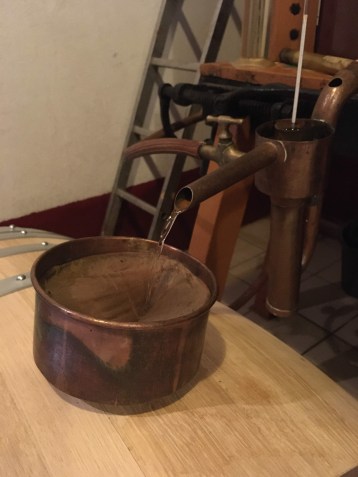 The wine being fermented came from Baco grapes, from their 5 hectares of vines, and was coming off the still at 54% abv. It was tepid, clear, and incredibly fragrant. It takes 8 hours to fill a barrel. Wine was being pumped from tanks at the opposite end of the room into the still, and in between was a long trestle table at which the Deyres family and friends would gather in the evenings to eat and celebrate the distillation. The still can’t be left unattended, and runs continuously, so someone has to sleep in the room while the distillation continues. The white gunge in the photo shows that the alambic plates were sealed with a paste of flour and water, i.e. a natural glue; anything not natural would result in an unacceptable taint of the eau-de-vie.
Jean-Luc then left the still briefly to show us his small but equally immaculate cellar. He keeps two barrels each year and sells the rest to Darroze. Traditionally, Armagnac producers would keep some Armagnac in case of a “rainy day”, to fund family weddings, etc. Jean-Luc continued to chat animatedly with us, and Amanda brought him up to speed on the latest happenings at BNIA, Armagnac’s regulatory body. There are many small Armagnac producers dotted about in very isolated corners of Gascony, and it is difficult for BNIA to reach out to all of them as regularly as they would like. So this was a lovely opportunity for Amanda and Jean-Luc to have an impromptu catch up.
Domaine au Martin is very typical of the smaller Armagnac producers who put their land to a variety of uses. In addition to their vines, Jean-Luc and his son also farm various cereals and, inevitably, ducks. There appear to be more ducks than people in Gascony.
It was a special honour to meet Jean-Luc. He is the personification of high quality artisan Armagnac production. Unassuming, unpretentious, and yet an undisputed master craftsman, quietly creating a hidden gem in the heart of the Gascony countryside. Those seeking authenticity and craftsmanship in their spirits need look no further. Many thanks to Marc, Amanda and Jean-Luc for a special and memorable tour.


 Here are some tips on how to go about your experiment:
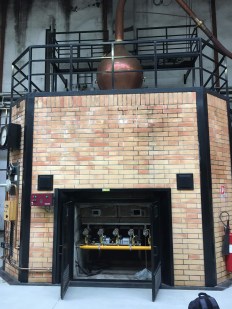 But inside lies a distiller’s paradise. For a start, there is not just one double copper pot still. There are three! The first is huge, so huge it would not all fit in my phone camera viewfinder. My photo of the two smaller stills was taken by clambering to the top of the big one. All three stills are heated by gas burners.
 Philippe explained that Janneau do not have their own vineyards. Instead, they have contracts with estates throughout Bas-Armagnac and Tenarèze. When the grapes are harvested and their juice has been fermented into wine, Philippe selects which batches he will use. When distillation starts (the plan was to do this in January and February 2020), the wine is piped from a tank into the top of the furnace of Alembic No 1, which is the large still. It descends for its first distillation by gravity, the resulting brouillis emerging at 30% abv. The brouillis is then split in half to go into the two smaller stills. The first 50 litres coming off are the heads which are put back into the wine to be re-distilled. The outflow pipe then moves to a barrel and the next 700 litres from the still is the hearts which become the Armagnac. After the hearts come the tails which are discarded. The hearts abv is 70-71% abv, much higher than for an Armagnac continuous alembic which, at Janneau, comes off at around 60% abv – in itself rather higher than other houses I visited.which aim for the low 50s. Janneau eau de vie is therefore lighter in character, and the pot still spirit is lighter than the alembic, with less character, and less need for long ageing.
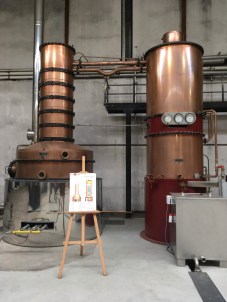 Although Janneau was a family owned and run Armagnac house, it was bought by Martell who, in the 1970s, introduced the copper pot stills used today. As for why, it’s obvious – double pot stills are used for Cognac, and they are also allowed in Armagnac, and as Cognac producers, that is what Martell knew and understood.
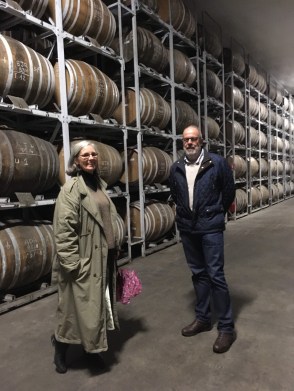 Across from the distillery are the cellars. One houses large blending vats used to achieve consistent house styles. The other contains approximately 2,400 barrels of Armagnac on which the grape variety and the estate are marked in chalk. Where possible, they distill and age wines from the various grapes separately.
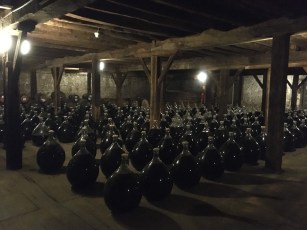 We adjourned to the centre of Condom to the Janneau family house for some tasting. The family don’t live there any more, sadly, but there remains an ancient and atmospheric cellar hidden deep beneath the house which is home to Janneau’s most ancient stocks, including vintage Armagnac from 1872!
 The VSOP had medium level copper mahogany colour tones, a pronounced nose of prunes, spices and apricot jam, and a warming and mellow palate with a prunes and pastry finish. The XO was a deep coppery mahogany, with very pronounced pastry, plum tarte tatin, sawn wood and hazelnut flavours. The palate had a pleasing sweetness, and the finish evolved from pastry notes to dried citrus and pecan nuts.
 Philippe then offered me a couple of samples from a range of 8, 12, 18 and 25 year old Armagnacs made from Ugni Blanc grapes (the grape variety of Cognac), from the many and varied soils of Tenarèze. The 12 year old, at 40% abv, had a nose of sawn wood, cherry, plum, nutmeg and mace. The palate was intense, with sweetness, and the finish was long with marmalade character. The 25 year old, at 43% abv, had a range of intense flavours, including prunes, pecans, cinnamon, orange, cherry wood and spicy smoke. The 12 year old in particular would not be a typical Armagnac, but certainly neither of them were like Cognac. Comparing them with notes I had made about Cognac on my Diploma course, there are similarities of course, as there are when comparing any Cognac with an Armagnac. But flavours like grapey perfume, stewed and baked apple, honeysuckle and hyacinth would point to a Cognac and I could find nothing of that character in these. They were instead expressions of the terroir of Tenarèze. And they were both excellent!
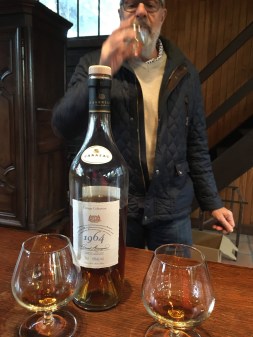 We concluded with a 1964 100% Baco from Bas-Armagnac matured in small barrels. Mahogany in colour, this had intense smoky, nutty and savoury character. There was sweetness as well as bitterness, and its long evolving finish ranged from walnuts, to toasted pecans, to mushrooms, to leather, to smoke. Most definitely Armagnac for grown ups. For those who enjoy a post prandial cigar, there is no need, it has all the smoke you could desire in the glass.
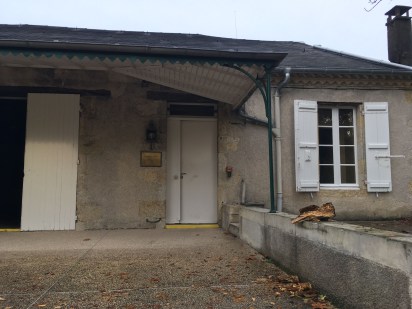 However, I felt great sadness on leaving the Janneau family home, knowing that it was soon to be sold, albeit to Aurian, a local Armagnac and liqueur producer (more about them here:
 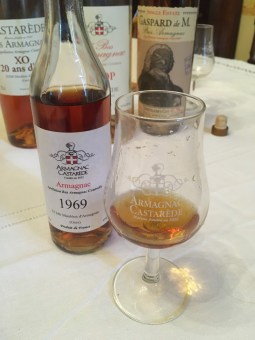 As testament to its long family line of expertise, Castarède can boast a collection of vintage Armagnacs dating back to 1893. On my visit, I was honoured to be offered a tasting of a 1969 (an important year in my life….) from a single producer which, I am told, is a relative rarity. Dark copper in colour, a nose of cherry kernel, candied orange, pecans, maple and chocolate invited me in, and a balanced structured palate with spices and pecans was my reward.
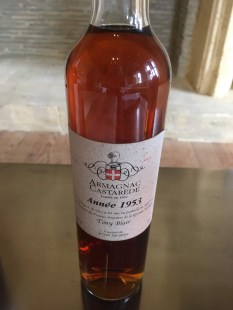 A rather more famous beneficiary of Castarède’s generosity was one Tony Blair, who as one of the G8 leaders convening at Evian in 2003, was given a bottling of Castarède Armagnac from his birth year, 1953. The bottles presented to the G8 leaders are displayed in a room containing c15th frescoes at Chateau de Maniban, bought by Castarède 30 years ago, which is now its base in Bas Armagnac, and where Castarède now has its own 16 hectare vineyard of Ugni Blanc, Folle Blanche, Colombard and (planted in 2015) Baco.
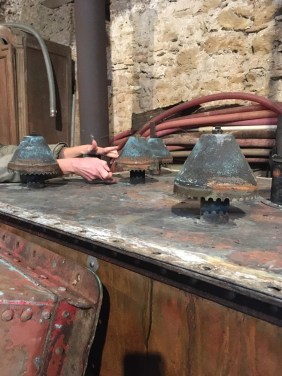 Michel led us to a barn where a gas fired alambic was in pieces ready to be cleaned, with distillation due to commence the following week (our visit was in early November 2019). This was a spirits student’s delight; you can see in one photo the level of the wine on the plate, which is higher than the bottom lip of the cap, which means the rising alcohol vapour is forced down by the caps into the wine. The continuous as opposed to batch distillation means that the wine and vapours are in constant contact. It is this, along with the relatively low percentage alcohol by volume off the still, which results in the eau de vie being so full of flavour. The other photo shows a coiled pipe, which is the condenser, which you rarely get to see.
 Distillation strength is set according to their plans for the spirit, so a spirit destined to be sold as a young VS, for example, will have a higher alcohol percentage by volume, and be less characterful, than one meant for ageing longer term.
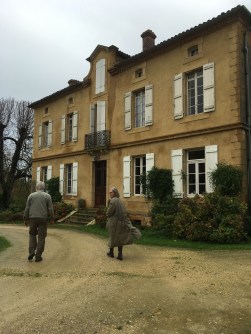 We adjourned to the house for some tasting. Blends came first. Gaspard de Maniban is a VS, 45.3%. Although not especially long, it had a range of pronounced flavours of straw, baked lemon, prunes, pastry and hints of ginger. A great cocktail mixer.
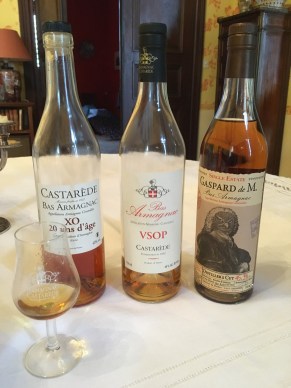 On to vintages, and there were some quirky and hugely varied character profiles here. The 1978 was copper amber in colour and of perfumed character with lychee, rose petals and liquorice evident in addition to the more familiar marzipan and prunes. It had a long pastry finish. The 1959, on the other hand, had bags of rancio buttery flavour and smokiness, as well as floral perfume and cherry and marzipan notes. See above for the 1969!
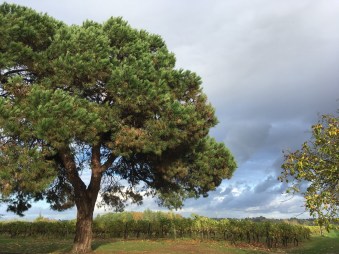 Domaine Laguille is found near Éauze in the westerly Bas Armagnac section of the Armagnac region. The tawny sandy soils for which it is known can be seen in this picture. You can see below the ancient timber framed farmhouse, which houses a cosy tasting room and the estate’s very own alambic. They grow their own grapes, make their own wine, make their own eau de vie, age their own Armagnacs, and do all of their own marketing. Not only that, and in common with tradition in many Armagnac estates, they combine wines from the last vintage with Armagnac from the vintage before to make the fruity appetising aperitif Floc de Gascogne. The estate’s website paints a picture of quaintness, its Armagnacs presented in traditional tall slim understated bottles.
 But things are changing at Domaine Laguille. Sandra Lemarechal joined them 3 years ago. She previously worked at Bureau National Interprofessionnel de l’Armagnac (B.N.I.A.) for 8 years, but her background was in export, so her aim is to expand Domaine Laguille’s export horizons.
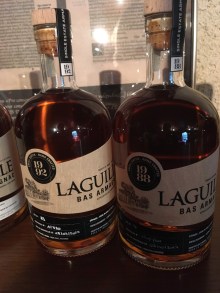 Sandra believed that if a wider range of consumers was to be reached, the packaging and labelling of Laguille’s products needed to be brought up to date. Traditional Armagnac bottles have taken various forms over the years, so Sandra was able to rediscover a wider shorter bottle shape which had heritage, but which also fitted recent bottle shape trends in gin and whisky. As for labelling, Sandra has combined the estate’s traditional styling and imagery with a modern wraparound wooden label reflecting the wood so important to ageing Armagnac and the ancient forests of Gascony.
 Not content with this, Sandra has gone further with product development and explored options for cask finishes, with which whisky consumers are now so familiar. The Scotch Malt Whisky Association kindly procured a cask made from Bordeaux Limousin oak used once only by Tobermory Distillery on the isle of Mull for its peated Ledaig expression. Laguille Armagnac from 2010, which had been aged in new oak, was then finished in it, the aim being to preserve the essence of the Armagnac, but adding to it a surprise peated element. At four weeks results were not encouraging. But after 3½ months, Sandra and Guy were delighted with the balance achieved.
 As we toured the winery and cellar, Sandra showed us their very own alambic, which they bought in 1990. This sizeable investment was made so they could control their style of Armagnac and accentuate its fruity elements. Guy adapted it with two pipes so he can decide whether to leave in the heads and tails or not. For Baco he keeps them, but for Colombard he usually removes them. Their blanche Armagnac is 100% Colombard. It was Ugni Blanc and Baco, but Sandra wanted Colombard which she felt would be more punchy and better for cocktails. I really enjoyed the blanche, there were poached pear and pineapple hints with a steely edge. The palate was nicely rounded, and not as fiery as some blanche I have tried. It was fruity with a long cherry finish and a pepper kick. I agreed with Sandra that this would be great fun for mixologists to play with and create something unique. Shame it’s not in the UK yet – our spirits buyers are not yet brave enough to take on something relatively niche.
 VSOP: aged in Gascon oak which gives lots of spices, with bread, toast, sawn wood, deep caramelised orange and toasted hazelnuts. Round and sweet. A great all rounder.
 When you arrive, there is no mistaking the whereabouts of the Armagnac cellar. It’s walls are black! The Germans, during their wartime occupation, had no difficulty locating the booze. They also appropriated the alambic (still) for its metal.
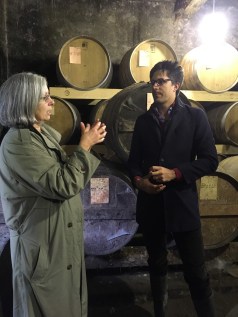 The current owner, or perhaps guardian, Gilles de Boisséson who is the 10th generation of this noble Armagnac family, was absent when Amanda Garnham of BNIA and I arrived. One of Gilles’ sons, Jean, kindly stepped up to show us around instead. I did wonder how much he would know, as he apparently worked in Paris and was home for a family visit. But it soon became clear that Jean is as passionate and committed to the Armagnacs of Lacquy as his father, and indeed, their forebears.
 The barrels, 50% of which are new each year, are fashioned by hand by local cooper Bartholomo from local pedunculated oak of varying char levels according to the needs of the eau de vie. The Armagnac can be moved into different barrels as it ages, according to its requirements.
 My visit was in early November 2019, and Jean told us that the harvest, in September, had been very good with clean fruit – a particularly pertinent observation bearing in mind that they use Folle Blanche. The distillation was due to start the following week, at which they aim for 53% and distill the grape varieties separately. There were various alambic parts on show which enabled an understanding of how the character of Armagnac comes from the vapours being forced through the wine on the plates as they ascend through the still.
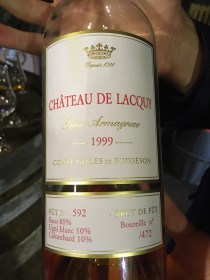 I also tasted a delicate 17 year old with appealing nutty orange character.
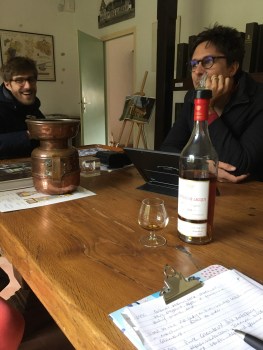 It was sad to leave such a magical place, but if ever I need to reminisce their website is first class, and I can’t recommend it highly enough for spirits students and Armagnac lovers. Everything is on there from information about the soil, the climate, the grapes grown, the winemaking, the distillation and the ageing process, including how to drink it! There are even recipes, for both cuisine and cocktails! Do have a look:
  Domaine d’Espérance is owned and managed by the indefatigable Claire de Montesquiou, who is a comtesse; though her noble heritage is soon forgotten when you meet her. She is generous, friendly, no-nonsense and down to earth, with no pretentious airs or graces whatsoever. Claire appreciated that this was the first Armagnac experience of my tour, and she patiently explained to me the rudiments of crafting Armagnac without any snootiness at exactly the right level. Indeed, her estate was an ideal first tour, as the Montesquious undertake all stages of the Armagnac production process on this one site. They grow grapes, make wine, age Armagnac, and bottle and market everything themselves. The only aspect they outsource is distillation, Claire favouring the services of an expert mobile distiller who operates 6 months of the year, rather than undertaking distillation herself and having to learn what is needed for two weeks of the year. Sadly I missed this year’s distillation, which was due to begin the next day. But I learnt so much in this visit that this is perhaps a good thing!
 The approach to the estate is through the vines, which lie in Bas-Armagnac, on its famous tawny sands. The fickle yet floral Folle Blanche and the ageworthy Baco are the Armagnac grapes, and a range of both well known and local grapes are grown for their wines. In addition, the estate also makes the local aperitif delicacy Floc de Gascogne, a blend of grape juice and Armagnac which is delicious chilled before dinner.
 In addition, Claire now has a stunning new cellar. She has to invest heavily in barrels (her barrels cost €800 each), as the Armagnac goes into new oak barrels in its youth. Claire is increasingly using medium char so she can create the lighter fruitier style preferred by today’s consumers.
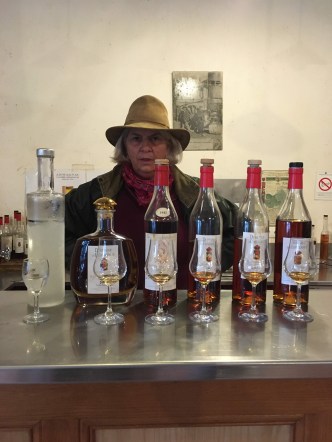 Claire therefore cleverly navigates commercial necessity while simultaneously offering bespoke craftmanship, which was very evident on tasting.
 As I had yet to taste blanche Armagnac, and as we had been discussing Cobrafire, Claire kindly let me sample hers, made from Folle Blanche and Baco. In retrospect I should have piped up at the start as tasting it at the end was perhaps not the best time to try something relatively light and new to my anaesthetised taste buds. I found it hard to describe, the nearest flavour I could think of being something like fig sorbet! There was a fruity tang, like biting green apple skin, with peach and plum notes, and hints of honeysuckle and white pepper. A fiery youth, but the fire was in balance with the fruity elements. Blanche is the eau de vie from the still without ageing, allowed to rest in stainless steel for 3 months before bottling. It must pass a panel of professional tasters before it can be classified as blanche Armagnac. If you call yourself a taste explorer then you need to venture into a glass of blanche. It is nothing like anything else. We discussed food matches; Claire suggested smoked fish, and oysters. Maybe a new tipple for the oyster shacks in Whitstable!
 All Armagnac houses have so much one can write about them. Whether it be their history, innovation, accolades, or an amusing anecdote here and there, there is always much to say. But Chateau Pellehaut makes the writer’s task especially tricky as there is so much to include and so little one wants to omit. Where to begin? So….I’ll start with the cows, not just because the pouring rain meant our tour began by taking refuge in the cowshed! The “output” of these 60 bonny blonde d’Aquitaines has (together with grape pomace) helped fertilise the vines for 50 years. So the cows are a good place to start. They are key to preserving the biodiversity and natural life cycle of the vines.
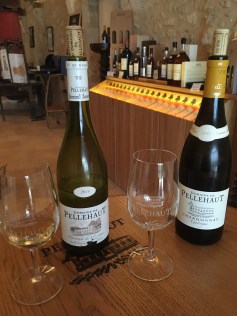 As in other Armagnac estates, the wines (sold as Domaine de Pellehaut) are made not just to be distilled and aged as Armagnac; they are quality bottlings in their own right. Development of the wine range took off in the 1980’s when Gascon Béraut’s son Mathieu joined the business. He planted a range of “international A list” varieties as diverse as Pinot Noir and Cabernet Sauvignon, as well as maintaining local varieties, recognising that there was sunshine aplenty, shelter from the Pyrenees, and wine friendly soils – so why not! Apart from Chardonnay and Petit Manseng, the wines they make are blends. Of the whites, I especially enjoyed the fresh and fruity Harmonie de Gascogne white, and the Réserve White (Chardonnay and Petit Manseng, which had some oak maturation) with its satisfying range of mango, papaya, custard and freesia aromas, generous butteriness, tannic edge and very long finish.
 The reds I tried were both blends containing Pinot Noir. Ampéloméryx, named after the creature whose 17 million years old skeleton was found here (think half stag half giraffe) was very fresh and juicy with inviting Pinot Noir aromas of red berry fruit and Syrah aromas of leather, and a long elegant chocolate and cherry finish. The Réserve Red 2014 combines Tannat, Cabernet Sauvignon and Pinot Noir – blends vary each vintage. It spent a year in oak, and had aromas and structure appealing to Cabernet Sauvignon lovers – cigar box, vanilla, blackcurrant, crunchy tannins, and a long cinnamon and vanilla finish. The role of Pinot Noir in this blend was unclear to me, but it’s a successful wine which would be interesting to try again after longer in bottle.
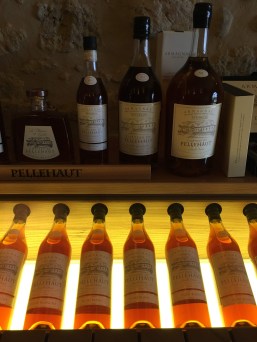 When tasting the Armagnacs, what impressed me was the quality across the range. One would expect La Reserve de Gaston (20 year old Ugni Blanc, Gaston’s favourite, and 10 year old Folle Blanche, introduced by Mathieu) to be good, and it was a delightful approachable sipper. Spicy warmth, with dates, cinnamon, pecans, baked apricots, coffee and brioche. The Collection XO, a blend of 20 and 30 year olds, was much more rancio with walnuts, coffee, prunes and ginger. The L’Age d’Or, a 40 year old, had refined tannins, candied orange, honeysuckle, cloves, cinnamon, vanilla, chocolate, prunes and a hint of tar on a very long classy finish.
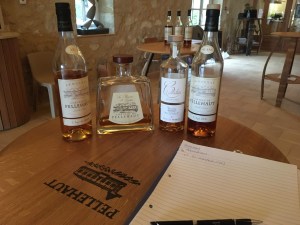 But the really telling part of this tasting was the less expensive end of the range. The VS 3 year old L’Age de Glace is excellent, and this expression often wins the Talent de l’Armagnac Armagnac on Ice category. Aged for a time in their l’Escoubasso wine barrels (a late harvest sweet Petit Manseng), this 100% Folle Blanche is rounded with dried apricot, orange, nutmeg, prunes, brioche and banana aromas. The finish over delivers for its price, and there is a satisfying fiery surge, but nothing too raucous – an achievement given its youth.
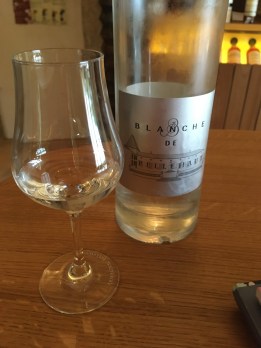 So too is the blanche, also 100% Folle Blanche. Aromas were a little shy when served very cold, mainly very ripe pear and rosemary stalk. But once warmed a little, intense floral aromas emerged, with yellow or mirabelle plums. The palate lingered long and clean with a floral fruity flourish of violets and fresh cherries.
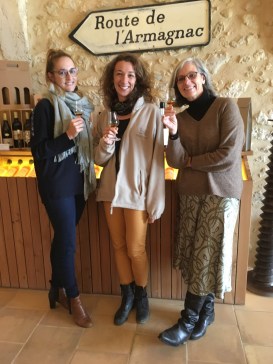 Above all else, Pellehaut know how to enjoy their Armagnacs. Our engaging hosts Noemie (left) and Aurélie, wife of Mathieu (centre), seen here with my tour guide Amanda Garnham from BNIA, gave me some tips for how to get the most from their range:
 We navigated our way past a slightly intimidating series of tall cylindrical tanks, and made our way to the start of the vinification process – the point where the grapes arrive. From the outset, Ithier emphasised that everything is done to preserve the primary aromas and flavours of the grapes. So tanks are sent into the vineyards to collect the grapes where they are covered with carbonic ice before they reach the winery. Some vines are very close but some are 25 km distant, and in warm conditions, grapes can oxidise quickly. Sulphur is not allowed in Armagnac production (it would become too concentrated and taint the spirit) so this method was devised to replicate its function. More ice is added at the winery to cover the grapes. A revolving screw then gently moves the grapes into Europe’s largest pressing room, where 8 huge pneumatic presses gently coax the juice from the grapes. The juice then flows down into an underground fermentation area. The pressing room is so large to ensure grapes are pressed as quickly as possible. If the pressing takes too long, wine quality suffers. We could see the wine in full fermentation beneath us through a vent. We could not go into the fermentation room because the CO2 levels would be too dangerous. Fermentation is controlled, slow (2-3 weeks) and cool temperature, after which the wines rest in external tanks which are like thermos flasks. They have a layer of insulation to keep the wines very cold, again to prevent oxidation. There are smaller tanks inside a room kept at -0.2 °C for smaller batches, but they can’t do this for all the wines as this would use too much energy – hence the outside tanks for larger batches.
 We then visited Tariquet’s pair of shiny copper alambics, which are housed in one of the original buildings, very stylishly renovated. One of the alambics used to be mobile. By special dispensation it retains its wheels, now redundant as it is fixed to the ceiling. The wood fired stills have to be manned 24 hours a day once distilling begins (redundant wooden stakes from the vineyard become distillation fuel), so there is a barbecue into which the embers from the still are placed to cook food for the distillers. Two huge former blending vats have become mini kitchens with doors cut into their sides.
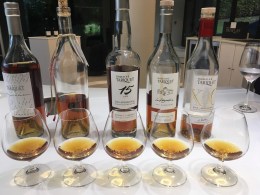 Then came a pair of very special creations. The Armagnac de Cabine, 80% Baco, 43% abv, came from carefully selected barrels. There were only 500 bottles made. Tariquet say they do not usually aim to make the spendiest bottles on the market, but these sold for 400 Euros a piece. The challenge came to replicate them, which has been done three times thus far, albeit that exact replicas are virtually impossible to achieve. The aromas were powerful, and yet, despite a tannic bite, the palate was smooth, gentle and fresh with an array of defined flavours – dried orange peel, concentrated raisins, smouldering tobacco and ash, sandalwood, to name a few.
 With that thought in mind, it seemed only right to conclude with a visit to one of the Armagnac cellars – so we went off site to a humid (as opposed to a dry) cellar on an estate bought by Tariquet some time ago. The torrential rain of recent days was seeping through the walls, since at one end the cellar is underground. No shiny tanks and pipes here – blackened with mould outside and in, the humidity was very evident in this cellar, as was the associated “angel’s share” hanging in the air. Lumpy black fungus was creeping its way over the barrels as the Armagnac slowly evolved in the silent darkness.
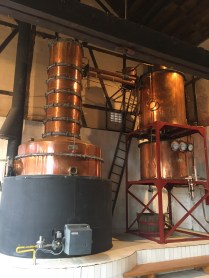 It was howling a gale during our visit, so it was with excitement and relief that we retreated into the distilling room. This SOFAC continuous column still was bought in 1975, evidencing the family’s commitment to making their own Armagnacs in the long term, from the outset. A recent addition to the 22-strong Laubade team is Francois, an oenologist from Bordeaux, whose task will be to maximise the quality of the wine used for distillation; many Armagnac houses are increasingly aware that the quality of the wine used for distillation is key to the quality of the Armagnac.
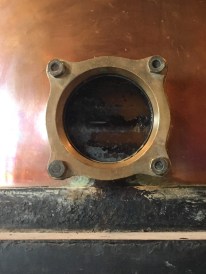 A key reason Armagnac is such a characterful spirit is its low distillation temperature. But it is also due to the alambic plates forcing the vapours through the wine lying on the plates. If you want to see this for yourself taste eau de vie from a still! There was a strong smell of wine and yeast in the distillation room (a small amount of lees, or dead yeast cells, are used – they can be seen in the window!), and the sample I tasted from the still was incredibly aromatic, with pastry notes from the lees, and an array of fruity aromas from the wine – squashed banana, lychee, cherry, raisin, plum and pear, to name but a few.
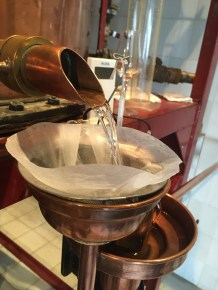 Denis had been anxious about the aromatics because the prolonged hot weather can result in the wine lacking in acidity and minerality, but he seemed very pleased with what he tasted from the still today. Today’s wine came from the grape variety Baco 22A, at an ideal abv of 10.5%. The range they look for is 10.2 – 10.8%. Distillation temperature is agreed each day according to the desired results, and today it was 58ºC.
 After a tour of the cellar, and of the “paradise” containing shiny bonbonnes full of the chateau’s most ancient Armagnacs (the precise components of some of them being shrouded in the mists of time), we adjourned to the tasting room – which was, to my amazement, inside the family home! Denis showed us into a lavishly decorated drawing room which added a sense of heritage to our tasting experience.
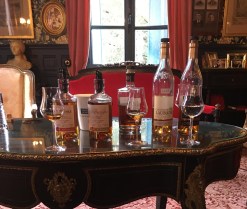 The XO is a more intense and exotic creature, using Ugni Blanc, Baco and a little Plant de Graisse. The youngest spirit is at least 15 years old – the next XO batch will use the 2004 vintage. So smooth and satisfying….there are intense incense notes (sawn sandalwood and smoke), and plenty of fruit and nut moreishness (orange, prunes, butterscotch and pecans). The bold richness is more than a match for the alcohol. Sip and nibble with top notch dark chocolate after an autumn Sunday afternoon walk perhaps…?
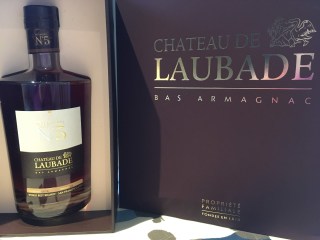 I had to rush away before tasting the Intemporel No.5, so Denis very kindly provided me with a sample to take home (declaration of interest please note!). He explained that this is a 20-30 year old small batch premium blend, which they first made in 2007 – when it was awarded World’s Best Brandy in the highly respected San Francisco World Spirits Competition. 3 batches a year are made, and it is intended to be the quintessence of the art of assemblage. This batch contains 48% Baco.
 The transformation of this estate in under 50 years is remarkable. As a wine lover, I suspect this has a great deal to do with the family’s recognition from the outset of the excellent terroir they have, and their continuing drive to make the highest quality wine which then feeds into the quality of the Armagnac. Armagnacs are incredibly long-lived, so it has taken perseverance and patience to realise Maurice’s vision from when he bought the estate over 40 years ago. It will be fascinating to see how this driven and aspirational family develop and grow their increasingly acclaimed Armagnac domaine in the future. It would be marvellous to return in a few years to see what they have been up to. In the meantime, many thanks to Denis for an amazing tour and tasting – and for my amazing Armagnac treat! You can find Chateau de Laubade Armagnacs in The Wine Shop Winscombe (see photo!).
 WINE TIME EVENTS